Report Structure and Format
Executive summary: One to two pages covering the roof's overall condition tier, the most critical findings requiring near-term action, and the recommended capital action in the 1-to-3-year horizon. Formatted for ownership, CFO, or board review without requiring the reader to parse the full technical detail. Buildings owned by entities like the Centene Corporation campus in Clayton or the Emerson Electric facilities in the Ferguson and Maryland Heights corridors require capital documentation that travels through multiple levels of review without losing meaning.
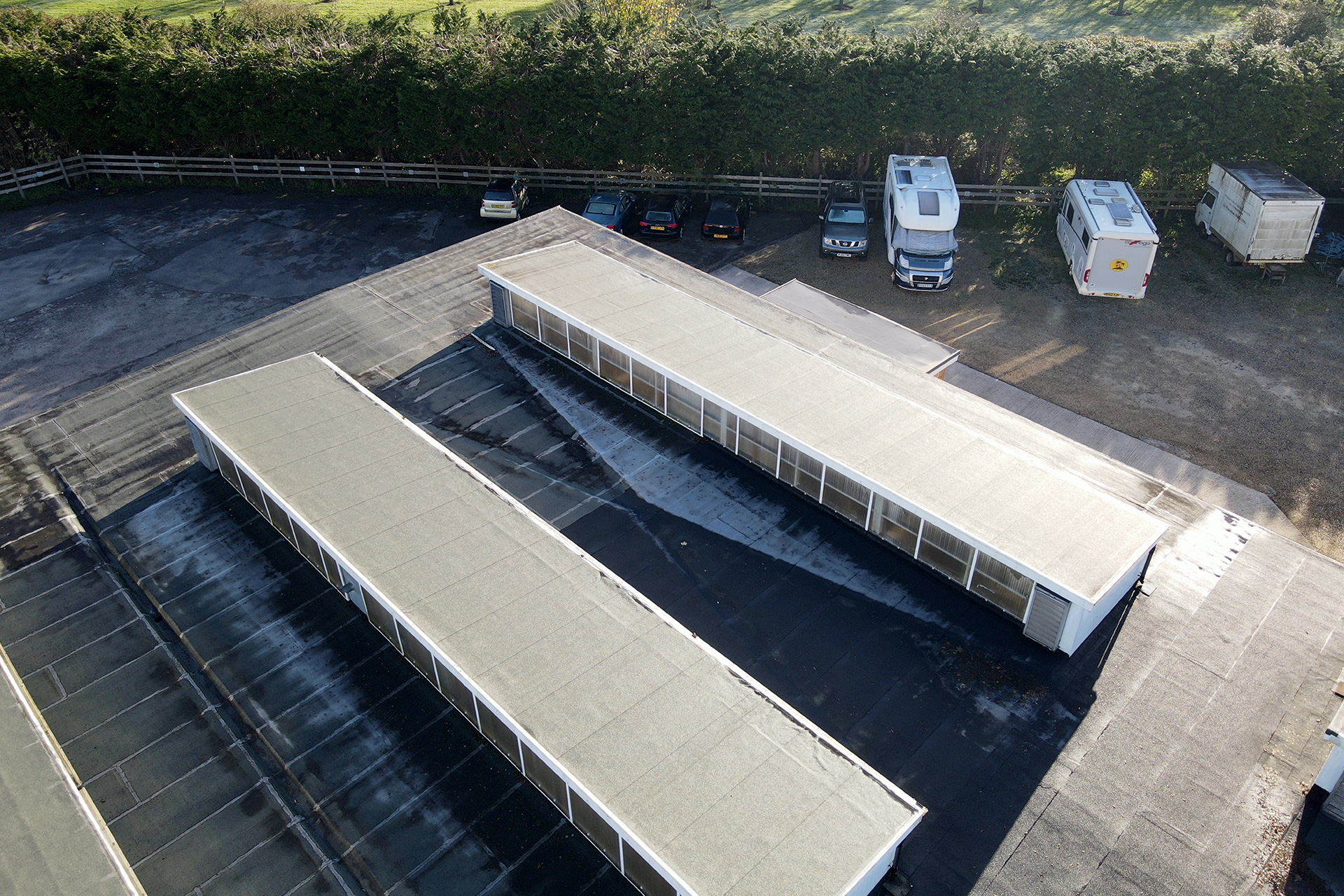
Zone-by-zone membrane findings: The roof is divided into named zones on a diagram. Each zone receives a condition rating for membrane, seam integrity, and any mechanical damage. Zone boundaries follow the natural drainage patterns and construction segments of the roof, not arbitrary grids. A zone that drains to a specific set of drains is treated as a unit for assessment purposes because the drainage pattern determines how water behaves in that zone during and after a rain event.
Flashing and Penetration Documentation
Every penetration, parapet section, curb flashing, drain ring, edge metal, and cap flashing is documented with a condition rating and a photo reference. Flashing failures account for the majority of water-infiltration events on St Louis commercial roofs, particularly after freeze-thaw cycles that work deteriorated sealant out of penetration terminations or lift cap flashings off their substrate. The flashing documentation is the section of the condition report that most directly informs the near-term repair action list.
For the brick masonry buildings common in the Downtown St Louis and Soulard corridors, we also document mortar joint condition at parapets and any spalling or efflorescence that indicates moisture migration through the masonry rather than through the roofing system. Water entry through deteriorated masonry joints produces interior damage that looks like a roof leak and is often misdiagnosed without the parapet wall inspection that a comprehensive condition report includes.
Urgency-Tier Action Matrix
The action matrix at the close of every report organizes all findings into four urgency tiers: immediate action for active leaks or conditions likely to produce water infiltration in the next rainfall event, near-term action for conditions that should be addressed within 90 days, monitor for conditions that are stable but trending toward deterioration, and routine for conditions within normal expected variation for a roof of that age. The matrix gives the building owner a clear priority order for spending decisions.
We do not use the urgency matrix as a sales tool. If a roof has no immediate-action findings, the report says so. If the only recommendation is to continue scheduled maintenance and inspect in six months, that is what the report says, and the owner can verify that against the condition data in the same document. The matrix is an honest prioritization of what we found, not a tool for generating repair revenue.
Condition Reports for Property Transactions
In the St Louis commercial real estate market, active on the Forsyth Boulevard corridor in Clayton, the Chesterfield Valley corporate district, the Maplewood redevelopment corridor, and the Earth City and Hazelwood industrial zones, roof condition reports are regularly required for property sales, refinancing, and insurance renewals. The pace of transactions in the Clayton CBD and the Chesterfield Valley has made pre-transaction roof documentation a standard due-diligence expectation.
For property transactions, we produce condition reports in a format compatible with ASTM E2018 property condition assessment standards. The report includes the information a Phase I assessor or lender engineer needs to evaluate the roof capital requirement: system identification, installation year, documented condition, estimated remaining useful life, and replacement cost estimate. Several carriers active in the St Louis market also require documented inspection records on commercial roofs over a certain age for continued coverage renewal, and we produce those records in the format the carrier's underwriter specifies.
Post-Storm Condition Reporting
Derecho and hail events that cross the St Louis metro generate insurance claim documentation needs on commercial roofs across entire districts simultaneously. The 2019 and 2022 derecho events both produced widespread commercial roof damage in the Earth City, Hazelwood, and Maryland Heights corridors, and the associated claim documentation requirements exceeded what most building owners had prepared.
Our post-storm condition reports document physical conditions with a protocol that distinguishes pre-existing deterioration from event-related damage. We record the storm event data including date and reported hail size from National Weather Service records, photograph impact locations with calibrated scale references, and document any membrane or flashing conditions that are storm-origin versus conditions that predated the event. Pre-existing conditions are noted separately and distinguished from event-related damage with photographic evidence and comparison to any prior inspection records we hold on the building.